
Wheels • Classic Porsche • Buyer Notes
1970 Porsche 911-T Targa: 7 Timeless Reasons This Open-Air Classic Still Matters
A complete gregcook.net-ready guide to the early long-wheelbase 911 Targa, including history, specifications, driving feel, buying advice, ownership notes, and current collector-market perspective.
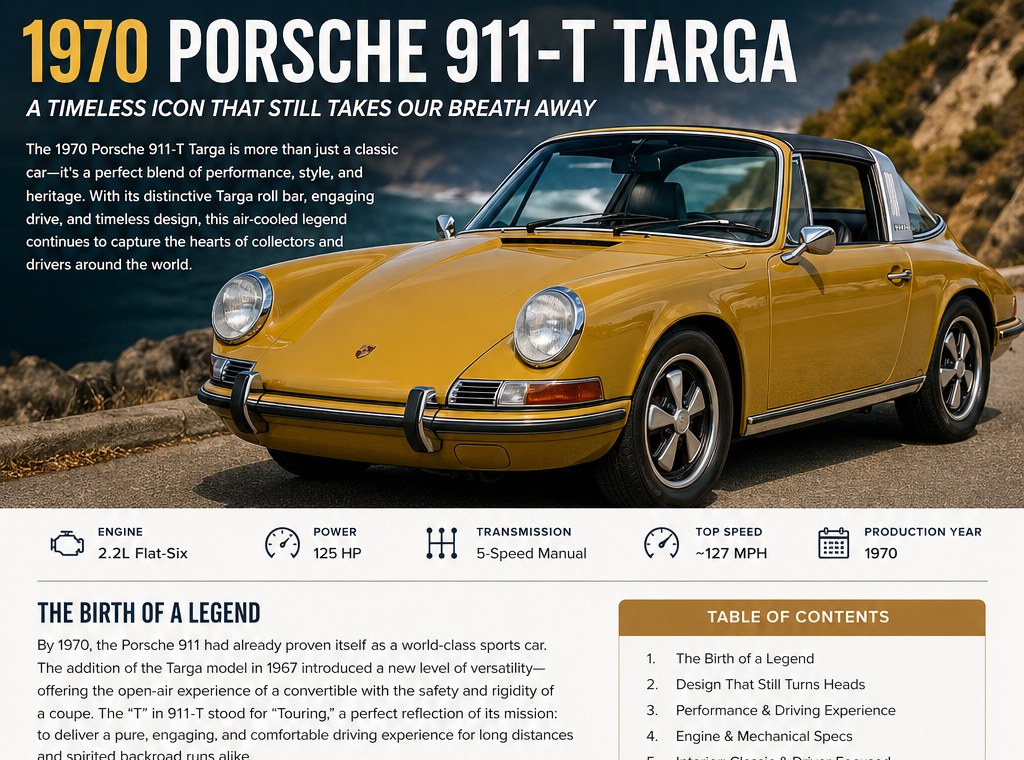
Quick Summary: What Makes the 1970 Porsche 911-T Targa So Appealing?
The 1970 Porsche 911-T Targa sits in a sweet spot of early 911 history. It has the slim bumpers, upright headlights, simple cabin, and mechanical honesty that made the original 911 famous. At the same time, the 1970 model year benefits from the 2.2-liter engine family and the longer wheelbase chassis that helped make the car more stable than the earliest short-wheelbase models. It is not the most powerful 911 of its era, and that is part of the charm. The “T” was the touring model, built for usable performance, real-world driving, and long-distance enjoyment rather than bragging rights.
For someone who loves old cars, open-air motoring, and mechanical simplicity, this car checks a lot of boxes. It feels light, narrow, and honest. You do not sit inside it like a modern luxury appliance. You wear it, listen to it, guide it, and learn its rhythm. The removable roof panel gives you sunlight and sound without turning the car into a full convertible. The fixed Targa bar adds structure and gives the car one of the most recognizable side profiles in Porsche history.
On a site like gregcook.net, where road trips, personal projects, family stories, and interesting machines all have a place, this Porsche fits naturally in the “Wheels” category. It is not merely a classic-car spec sheet. It is the kind of car that invites a story: a cool morning drive, a mountain road, a garage project, a father-and-daughter memory, or a Saturday afternoon spent adjusting, cleaning, and admiring details that modern cars often hide.
Why the 1970 Porsche 911-T Targa Model Year Matters
The 1970 model year is important because it belongs to the early long-wheelbase chapter of the classic 911. Porsche lengthened the wheelbase for the 1969 model year, which helped calm the sharper handling traits of the earliest cars. By 1970, the 911 had matured without losing the delicate look and compact feel that define the original design. This is one of the reasons collectors and drivers continue to care about the 1970 cars. They still look pure, but they feel more settled.
The 1970 911 lineup also received a larger 2.2-liter engine family. The 911T was the entry-level model, the 911E sat in the middle, and the 911S was the performance flagship. That hierarchy matters when shopping today. The E and S models often command more money because they offered more power and higher equipment levels. The T, however, can be the smarter driver’s choice. It delivers the core 911 experience with less intimidation, lower mechanical stress, and a personality that rewards smooth driving.
The “T” designation is sometimes misunderstood. It does not mean Targa. Porsche has used “T” to mean Touring, and the concept traces back to the original 911 T as a purer, driver-focused model. That makes a 911T Targa a neat pairing: Touring specification plus open-air roof design. It is relaxed enough for a back-road cruise but still lively enough to feel like a true Stuttgart sports car.
Another reason the 1970 car is appealing is its balance between vintage and usable. You get chrome trim, simple gauges, a thin-rimmed steering wheel, and that unmistakable air-cooled soundtrack. You also get a more confidence-inspiring stance than earlier cars. For many hobbyists, that makes it a classic that can still be driven rather than treated only as a museum object.
The Targa Concept: Coupe Strength, Open-Air Freedom
Porsche introduced the 911 Targa in the 1960s as a creative answer to a real problem. Open cars were loved by drivers, but safety concerns were growing. Rather than simply build a traditional convertible, Porsche created a new kind of body style with a removable roof section and a fixed roll bar behind the seats. Porsche’s own history material describes the original 911 Targa as the world’s first “safety cabriolet” with a fixed safety or roll bar. The idea gave owners fresh air while preserving more structure than a conventional soft-top design.
The name “Targa” also carries racing flavor. It points to the Targa Florio, the legendary Sicilian road race where Porsche built an important competition reputation. That connection matters because Porsche rarely chose names by accident. Carrera, Targa, Turbo, and Touring all carry meaning. In this case, the name helped turn an engineering solution into an icon.
In daily use, the Targa roof makes the car flexible. With the panel installed, the car feels like a snug coupe. Remove the panel and the cabin opens to the sky. The fixed bar remains in place, so the driver gets a feeling of security that a full convertible does not always provide. The shape is also beautiful. From the side, the bright Targa bar frames the roofline and separates the car from a standard coupe.
That mix of practicality and personality is why the Targa has remained part of Porsche culture for decades. It gives a driver the sound of the engine, the wind above the windshield, and the look of a classic 911 without giving up the whole roof structure. On a 1970 911T, the combination feels especially honest because the rest of the car is so simple and mechanical.
Exterior Design: Simple Lines, Chrome Details, and a Perfect Targa Profile
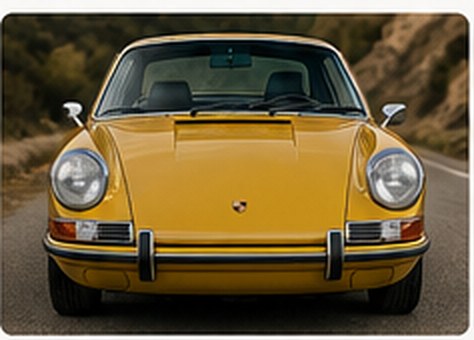
The beauty of an early 911 is not loud. It is clean, compact, and confident. The front fenders rise into the driver’s view. The round headlights sit proud of the body. The bumpers are slim. The glass area is generous. The car looks athletic without looking heavy. In an era when many modern performance cars have become bigger, wider, and more aggressive, the early 911 reminds us that a sports car does not need to shout.
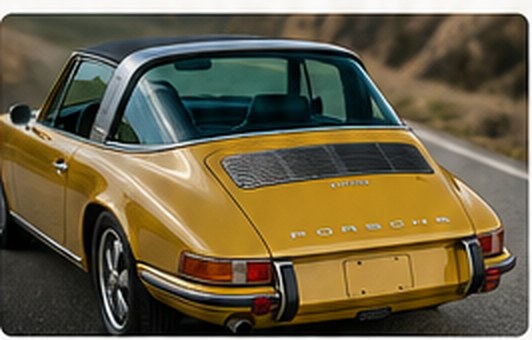
The 1970 Targa body adds another layer of character. The stainless Targa bar gives a strong visual break between the windshield and rear glass. The removable roof panel changes the mood of the car in minutes. With the roof in place, it looks tidy and purposeful. With the roof removed, it becomes a weekend escape machine. The rear engine lid, simple badging, and narrow stance all help preserve that lightweight look.
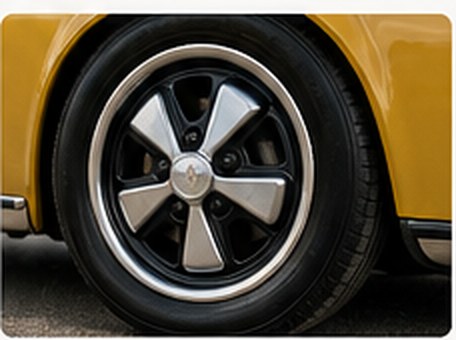
Wheel choice can change the car’s personality. Many enthusiasts love Fuchs alloy wheels because they suit the 911 perfectly. They look technical without looking busy. Chrome steel wheels can also be beautiful on the right car, especially if the goal is a more period-correct touring look. Factory colors from this era can be wonderful as well, from understated silvers and whites to brighter yellows, oranges, blues, and greens.
Because the design is so simple, condition matters. A poorly aligned bumper, incorrect trim, rust bubbling around the body, or mismatched paint can stand out quickly. A correct early 911 should look crisp. Panel gaps should be reasonable for the age of the car. The Targa top should sit properly. The seals should look cared for. The best examples have a quiet sense of integrity, as if every detail belongs exactly where it is.
1970 Porsche 911-T Targa Specifications and Mechanical Details
Under the rear decklid sits the heart of the car: an air-cooled flat-six. For 1970, the 911T used a 2.2-liter version of Porsche’s famous engine. It was not the hottest engine in the lineup, but it had enough power to make the lightweight chassis come alive. Specification sources commonly list output at about 125 bhp at 5,800 rpm and torque near 131 lb-ft at 4,200 rpm. Those numbers may look small today, but they are paired with a car that weighs roughly the same as many compact modern economy cars.
The 911T’s carbureted character is a major part of its appeal. While the higher E and S models used more sophisticated fuel injection in this era, the T kept a simpler, more traditional feel in many markets. A properly tuned carbureted flat-six has a sound and response that make the whole car feel alive. It may require patience and knowledgeable maintenance, but when it is right, the engine feels eager and musical.
Transmission choice is worth noting. Many buyers today prefer a five-speed manual because it suits the car’s sporting nature, but early 911Ts could be found with different gearbox configurations depending on market and options, including four-speed manual and Sportomatic versions. The five-speed is often the enthusiast favorite, yet condition and originality should matter more than a single checklist item. A sorted four-speed car can still be a joy, especially for relaxed touring.
| Engine | 2.2-liter air-cooled flat-six |
|---|---|
| Power | About 125 bhp at 5,800 rpm |
| Torque | About 131 lb-ft at 4,200 rpm |
| Fuel system | Carbureted on the 911T in common period specification |
| Layout | Rear engine, rear-wheel drive |
| Body style | Two-door Targa with removable roof panel |
| Top speed | Commonly listed near 127 mph |
| Curb weight | Roughly 2,200–2,250 pounds, depending on equipment and source |
The important lesson is simple: do not judge the car by horsepower alone. The 911T is about weight, balance, steering, sound, visibility, and connection. A modern sedan may outrun it in a straight line. That sedan will not feel like this.
Driving Experience: Light, Honest, and Wonderfully Mechanical
The best way to understand an early 911 is to drive it with respect. The car rewards smooth hands, steady throttle, and attention. The steering is light once rolling, and the front end gives the driver a clear sense of where the tires are. The pedals, shifter, and engine all ask for involvement. Nothing feels isolated. Even a short drive can remind you how much communication has been engineered out of many modern cars.
The rear-engine layout gives the 911 its signature feel. There is strong traction coming out of corners because the engine weight sits over the driven wheels. At the same time, the driver must understand weight transfer. Lift suddenly in the wrong place, and the car can remind you that physics still has the final word. That is not a flaw so much as a character trait. A well-driven 911 feels balanced, nimble, and deeply satisfying.
The Targa body changes the experience in the best way. With the roof panel removed, you hear more intake noise, more fan noise, more exhaust note, and more of the world around you. The car becomes an event at ordinary speeds. That matters because the 911T does not require illegal speeds to be fun. A gentle two-lane road, a cool morning, and a clean-running flat-six are enough.
Brakes, tires, suspension bushings, and alignment make a huge difference. A tired early 911 can feel vague and nervous. A properly sorted one feels alive and accurate. When shopping or restoring, the goal should not be to make the car feel modern. The goal should be to make it feel like a healthy version of itself.
Interior: Driver-Focused, Simple, and Built Around the Road
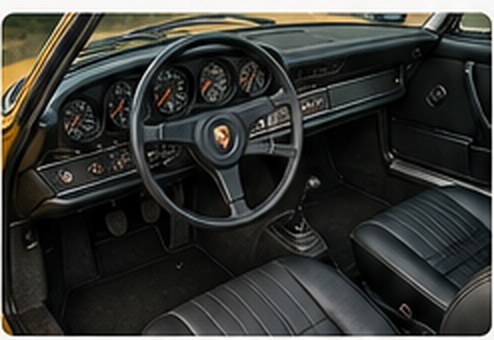
The cabin of a 1970 911T is a reminder that good design does not need to be complicated. The five-gauge instrument layout places important information in front of the driver. The tachometer takes pride of place because engine speed matters in a car like this. The seats are slim compared with modern chairs, the dashboard is clean, and the cabin feels airy because the pillars are narrow and the glass area is large.
Comfort is better than some people expect. The 911 was always more usable than a fragile exotic. It could commute, travel, and handle weekend trips. The Targa roof adds flexibility, although roof seals and fitment are very important. A poorly fitted top can lead to wind noise and water leaks. A well-maintained top, on the other hand, gives the car genuine all-season usefulness for an owner who respects its age.
Storage is part of the car’s cleverness. The front trunk can carry more than expected, and the small rear seats can hold bags, jackets, or children for short rides. No one should pretend an early 911 is a family SUV, but it is practical enough for real memories. That is part of the magic. It can be a collectible and still be a usable machine.
Photos
Buying Guide: What to Inspect Before You Buy
A 1970 Porsche 911T Targa can be a wonderful classic, but condition is everything. The first inspection priority is rust. Early 911s can rust in expensive places, including floor pans, rockers, battery boxes, torsion bar areas, suspension pickup points, front pan sections, door bottoms, fender lips, and around the windshield or rear glass. A shiny paint job means very little if the metal underneath has been poorly repaired.
The next priority is documentation. Matching numbers can matter, especially for collectors, but a well-documented car with honest history is also valuable. Look for service records, restoration invoices, ownership history, photographs of repairs, and a Porsche Certificate of Authenticity or Porsche Production Specification when available. A car with a clear story is easier to understand and usually easier to sell later.
Mechanical condition matters just as much. The engine should start cleanly, settle into a reasonable idle when warm, and pull smoothly through the rev range. Smoke, major oil leaks, poor compression, noisy valve train behavior, carburetor problems, and worn ignition components can all add cost. The gearbox should shift cleanly once warm. Early 911 gearboxes require a deliberate touch, but they should not grind, pop out of gear, or feel broken.
The Targa-specific parts deserve close attention. Inspect the roof panel, latches, seals, alignment, and rear glass area. Targa tops can be restored, but the work is specialized. Water leaks can cause damage that spreads far beyond the roof itself. Also look at door fit and window alignment because poor sealing can make the car less pleasant to drive.
Pre-Purchase Inspection Checklist
- Hire a Porsche specialist familiar with early air-cooled 911s.
- Inspect rust-prone structural areas on a lift.
- Confirm engine number, transmission number, and VIN documentation.
- Review carburetor condition, ignition health, compression, and leak-down results.
- Check gearbox behavior cold and warm.
- Inspect the Targa top, seals, latches, and water intrusion points.
- Verify brake, suspension, steering, and tire condition.
- Study the quality of previous paint, metal, and interior work.
Maintenance and Restoration: Keep It Original, Sorted, and Driven
Owning an early 911 is not like owning a modern appliance. It asks for regular attention. Oil changes, valve adjustments, ignition service, carburetor tuning, brake maintenance, fuel-line inspection, and suspension checks are all part of the relationship. That may sound like a burden, but for many hobbyists it is part of the pleasure. The car is understandable. You can see parts, hear changes, and feel improvements.
The best maintenance plan is preventive. Small issues can become expensive when ignored. A minor oil leak may signal a gasket that needs attention. A sticky carburetor linkage may affect drivability. Old tires can ruin the feel of the car even if they still have tread. A weak battery or poor ground can create strange electrical problems. The smartest owners fix small things before they become big things.
Restoration choices should match the car’s identity. A highly original car deserves a light and careful touch. A car that has already been modified may be a better candidate for sympathetic upgrades. Common improvements can include better tires, rebuilt suspension, refreshed brakes, improved lighting, and careful engine tuning. The goal should be reliability and safety without erasing the vintage character.
Parts support for classic 911s is one of the reasons these cars remain attractive. Porsche Classic, independent specialists, and a large enthusiast community help keep them alive. Still, early 911 restoration can be costly. Trim, interior pieces, correct wheels, engine work, paint, and metal repair can add up quickly. A cheaper car is not always cheaper in the long run.
Value and Collectibility: Why the 911T Targa Still Has a Strong Following
Classic 911 values have changed dramatically over the past two decades. Cars that were once simply used sports cars are now recognized as important collectibles. The 911T long lived in the shadow of the E and S, but that has helped it develop a loyal following among people who want the early 911 experience without chasing the most expensive badge.
Market data should be used as a guide, not a promise. Condition, originality, color, options, documentation, location, and recent work can all change value. As of current market references, Classic.com lists the market benchmark for the 1970-1971 2.2-liter 911T Targa segment in the mid-$60,000 range, while other valuation tools show good-condition early 911T pricing in a similar neighborhood for comparable 1970 configurations. Exceptional restored cars, special colors, highly original examples, or cars with unusually strong history can sell for much more. Projects or cars with rust can cost less up front and far more later.
For a hobby owner, the best approach is to buy the best car you can reasonably afford and choose condition over fantasy. A properly sorted driver may bring more joy than a concours car you are afraid to use. The 911T Targa is especially good in that role because it was never only about top speed. It was built for touring, sound, open air, and connection.
That is also why the car remains emotionally valuable. The market may rise and fall, but a clean early 911 Targa still delivers something rare: a sense of occasion at normal speeds. That kind of enjoyment does not go out of style.
Frequently Asked Questions About the 1970 Porsche 911-T Targa
What does the “T” mean in Porsche 911T?
The “T” stands for Touring. In the early 911 lineup, the 911T served as the more accessible model below the 911E and 911S. It focused on usable performance, lighter feel, and driver enjoyment rather than maximum horsepower.
Is the 1970 Porsche 911T Targa fast?
It is quick enough to be enjoyable, but it is not fast by modern standards. Common specification sources list the 2.2-liter 911T at about 125 bhp, with a 0-60 mph time around the high-nine-second range and a top speed near 127 mph. The real appeal is steering feel, sound, balance, and involvement.
Is a Targa better than a coupe?
Neither is automatically better. A coupe may feel a bit tighter and is often preferred by purists, while a Targa gives open-air driving and a distinctive look. The better choice depends on how you plan to use the car. For relaxed weekend drives, the Targa is hard to beat.
What should I inspect first on a 1970 911T Targa?
Start with rust and structural condition. Check the floor pans, battery area, rockers, torsion bar areas, suspension pickup points, fender lips, and glass surrounds. After that, inspect the engine, gearbox, brakes, suspension, and Targa roof seals.
Are parts available for a 1970 Porsche 911T?
Yes, parts support is generally strong because the classic 911 community is large and Porsche Classic supports many older models. However, correct early parts can be expensive, and high-quality restoration work requires a knowledgeable specialist.
Can you drive a 1970 911T Targa regularly?
Yes, if it is properly maintained. These cars were built to be driven. That said, they require more routine care than modern cars. A good owner keeps up with oil changes, valve adjustments, carburetor tuning, brake service, tires, seals, and electrical basics.
What makes the 1970 model year different from later 911Ts?
The 1970 car belongs to the 2.2-liter early long-wheelbase period. Later 1972-1973 911T models moved to the larger 2.4-liter engine family and had other updates. Many enthusiasts like the 1970-1971 cars because they preserve an early look while offering the improved 2.2-liter driving character.
Is the 911T Targa a good investment?
It can be a strong collectible when condition, originality, and documentation are right, but it should not be purchased only as an investment. Buy one because you love the drive and the ownership experience. Market values can change, and restoration costs can surprise even careful buyers.
Final Thoughts: A Classic Worth Driving, Preserving, and Enjoying
The early 911 has survived because it offers more than style. It gives the driver a clear connection to the road, the engine, and the machine itself. The 1970 Porsche 911-T Targa is a particularly appealing version because it blends the charm of the early body with the stability of the long-wheelbase chassis and the easygoing spirit of the Touring model.
It is not the most powerful classic Porsche. It is not the rarest. It is not the cheapest to restore. None of that hurts its appeal. In many ways, the 911T Targa is special because it is approachable. It invites you to use it. Take the roof panel off. Listen to the flat-six. Watch the front fenders rise over the road. Feel the shifter, the pedals, and the steering. That is the experience people remember.
For gregcook.net, this article belongs beside the stories of road trips, personal projects, Porsches, motorcycles, family, and the simple pleasure of keeping interesting things alive. A good classic car is never just transportation. It is a conversation starter, a teacher, a memory maker, and, on the right road, a reminder that the journey can still be the best part.
Helpful External References
For readers who want to compare specifications and history, see Porsche’s official Targa history article, Stuttcars’ 911 T 2.2 specification guide, Auto-Data’s 1970 911 Targa specification listing, Classic.com market data, and Hagerty’s valuation tools.