Family history often survives in fragments: a pension card, a county record, a remembered wound, a place-name that still carries emotional weight long after the gunfire stopped. In the case of Joshua S. Sullins, one of those fragments is especially powerful. His Alabama pension record identifies him as a private in Company A, 3rd Alabama Cavalry, notes his enlistment from Blountsville, Alabama, and states that he was wounded at New Hope Church, Georgia. That single line links one young Alabamian to one of the hardest, darkest, and most punishing fights of the Atlanta Campaign.
Joshua S. Sullins was born on December 19, 1845, in North Carolina according to the record supplied here, and he enlisted in Alabama in March 1863 at about seventeen years of age. However historians describe the battle in military terms, his story begins in a more human way: as a teenager drawn into a war that had already become long, costly, and relentless. By the spring of 1864, that war had moved into north Georgia, where Confederate and Federal armies fought not in the open grandeur people often imagine, but in choking woods, rain, mud, smoke, trenches, and close-range violence.
Joshua S. Sullins and the 3rd Alabama Cavalry
The surviving record details supplied for this article identify Joshua as "J. S. Sullins", born in North Carolina, enlisted in Alabama, a private in Company A of the 3rd Alabama or Confederate Regiment, and later a pensioner under Alabama pension number 30394. The pension application was reportedly witnessed by C. C. Helms and W. A. Helms, and the source cited is a Cullman County pension record card.
National Park Service unit data shows that the 3rd Alabama Cavalry was organized at Tupelo, Mississippi, in June 1862 from companies that had already seen service, and that the regiment later took part in the Knoxville and Atlanta Campaigns before continuing on to the defense of Savannah and the Carolinas. The regiment served under officers including Colonel James Hagan. During the Atlanta Campaign, the 3rd Alabama Cavalry belonged to the Confederate cavalry arm under Joseph Wheeler, specifically in the Alabama cavalry brigade associated with John T. Morgan and William W. Allen.
That point matters, because cavalry service in 1864 did not always mean romantic, saber-drawn charges. In the rough, heavily wooded fighting around Dallas, New Hope Church, and Pickett’s Mill, cavalrymen were often used in screening, patrolling, skirmishing, courier work, and at times fighting dismounted. Some secondary accounts note that parts of the 3rd Alabama Cavalry fought as infantry in entrenchments during the Atlanta Campaign. That means Joshua’s wound at New Hope Church likely came in a battle environment far closer to trench and skirmish warfare than to the popular image of open-field cavalry action.
The Strategic Setting: Why New Hope Church Happened
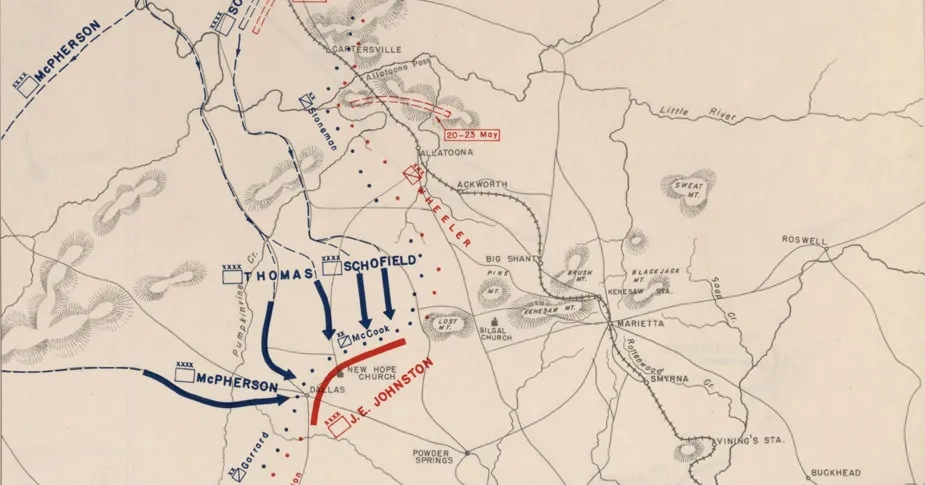
After the bloody opening phase of the Atlanta Campaign in May 1864, Confederate General Joseph E. Johnston withdrew from successive positions in northwest Georgia as Union General William T. Sherman repeatedly tried to turn his flank rather than smash directly into prepared defenses. Following Johnston’s retreat to the strong position at Allatoona Pass, Sherman tried another maneuver. He pushed toward the small crossroads communities west of Marietta, hoping to get around the Confederate left and force Johnston back once again.
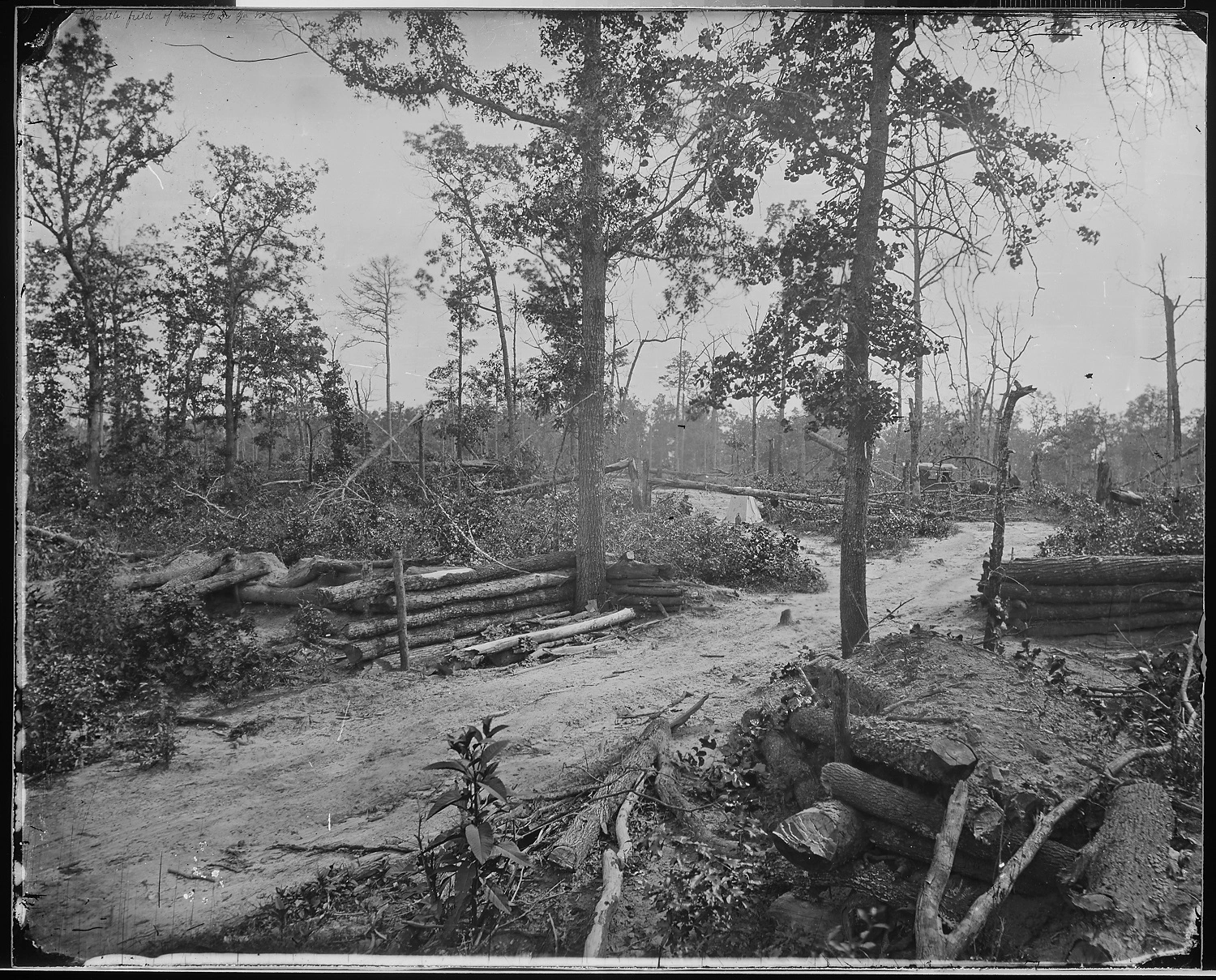
Johnston anticipated the move. Rather than being surprised, the Confederates shifted into position around New Hope Church and the roads near Dallas, Georgia. On May 25, 1864, Sherman believed he was facing only a limited Confederate force. He ordered Joseph Hooker’s XX Corps forward against what turned out to be a much stronger line than expected. The result was a sharp Confederate defensive success.
American Battlefield Trust summaries describe Union troops advancing over rough ground later called the "Hell Hole" and being badly mauled by infantry and artillery fire in front of Confederate earthworks. The battle did not produce the huge casualty totals of Gettysburg or Chickamauga, but in tactical and human terms it was savage. The Confederates held. Union losses were severe. Both sides then dug in and continued skirmishing.
A Timeline of the Fight
- May 23, 1864: Sherman begins moving toward Dallas, seeking to turn Johnston’s left and avoid a direct assault on the fortified line at Allatoona.
- May 24: Confederate forces react quickly and take blocking positions in the New Hope Church area.
- May 25: Hooker’s XX Corps attacks what Sherman thinks is only a token Confederate force. Instead, Federal troops run into a defended line supported by earthworks, artillery, and concealed infantry.
- May 25 evening: The Union attack is repulsed with heavy casualties. Rain, darkness, mud, and confusion deepen the misery of the field.
- May 26: Both sides entrench and continue heavy skirmishing. The engagement becomes part of a broader line of fighting around New Hope Church, Dallas, and Pickett’s Mill.
- May 27: Sherman shifts attention again, and the campaign moves into the next clash at Pickett’s Mill.
The Battlefield Itself
New Hope Church was fought in terrain that favored the defender and punished the attacker. The countryside was heavily wooded, broken by ridges, ravines, and poor roads. Visibility was short. Coordination was difficult. Units frequently lost alignment. Officers struggled to see beyond a few dozen yards in places. Rain and wet ground added misery to danger. This was not the dramatic, highly visible fighting of open farmland; it was a battle of surprise contact, hard earthworks, close fire, and fear of what could not be seen.
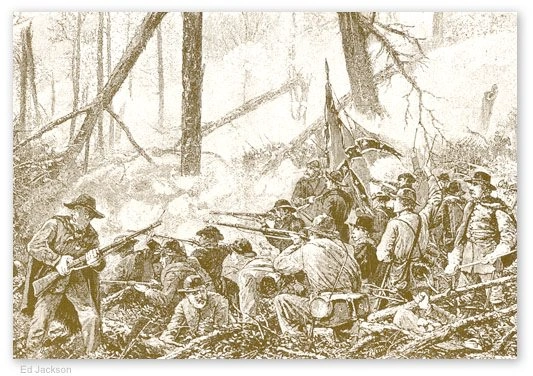
For a soldier like Joshua S. Sullins, the experience would have been intensely physical. Horses had to be managed or left to the rear if cavalry fought dismounted. Orders moved imperfectly. Small groups of men often felt isolated. Artillery shells burst in timber. Minie balls cut through leaves and branches. The smoke of black powder hung low in humid air. Men crouched behind trees, fence rails, and improvised works, trying to guess where the next volley would come from.
If Joshua was wounded during the main action of May 25 or the skirmishing that followed on May 26, he was almost certainly caught in one of these close, disordered forms of combat. Because his pension record ties the wound specifically to New Hope Church, the injury became one of the defining episodes of his military life—serious enough to remain part of his veteran identity decades later when Alabama recorded his pension claim.
What Kind of Combat Might He Have Seen?
The exact circumstances of Joshua’s wound are not yet documented in the sources reviewed for this page, so any reconstruction has to remain careful and honest. Still, the known military context allows a realistic historical picture.
1. Screening and contact work
Confederate cavalry played a major role in screening Johnston’s army and keeping track of Sherman’s movements during the Atlanta Campaign. If Joshua’s company was operating in that role, he may have been wounded during probing, skirmish fire, or contact around the roads leading into the New Hope Church line.
2. Dismounted fighting
Cavalry regiments in this theater frequently fought on foot when terrain or tactical conditions made mounted action impractical. Around New Hope Church, that was often the practical reality. If Company A was deployed dismounted, Joshua may have fought much like an infantryman—holding a line, firing from cover, or supporting entrenchments under pressure.
3. Artillery or sharpshooter fire during the extended engagement
Even after the initial Union assault was repulsed, the fighting did not simply stop. Entrenching, skirmishing, and artillery fire continued. Many wounds in Civil War battles occurred not in a single grand charge, but in the hours after the headline attack, when men remained exposed to shells, random shots, and nervous close-range exchanges in the brush.
Why New Hope Church Mattered
New Hope Church was important not because it ended the Atlanta Campaign, but because it showed how difficult that campaign would be. Sherman could maneuver, but Johnston could respond. Union numerical superiority did not guarantee a quick victory when Confederates occupied strong ground. Earthworks, field fortifications, and wooded terrain multiplied defensive power. New Hope Church, followed immediately by Pickett’s Mill and the fighting at Dallas, proved that the road to Atlanta would be slow and costly.
The battle also illustrates a larger truth about the late Civil War in the western theater: the fighting increasingly foreshadowed modern war. Men dug in quickly. Lines extended. Firepower punished frontal attacks. Skirmish lines and fieldworks mattered enormously. A cavalry private from Alabama could find himself in a combat environment that looked less like a sweeping mounted campaign and more like grim, semi-static trench warfare in the woods.
The Human Dimension of the Wound
For descendants, the word "wounded" can sound like a military notation. In reality it meant interruption, pain, and uncertainty. A wound might be slight, disabling, or permanently life-altering. It might involve a bullet, shell fragment, or some other trauma of battle. It could lead to field treatment, convalescence, infection, long recovery, or chronic disability that followed a veteran for life.
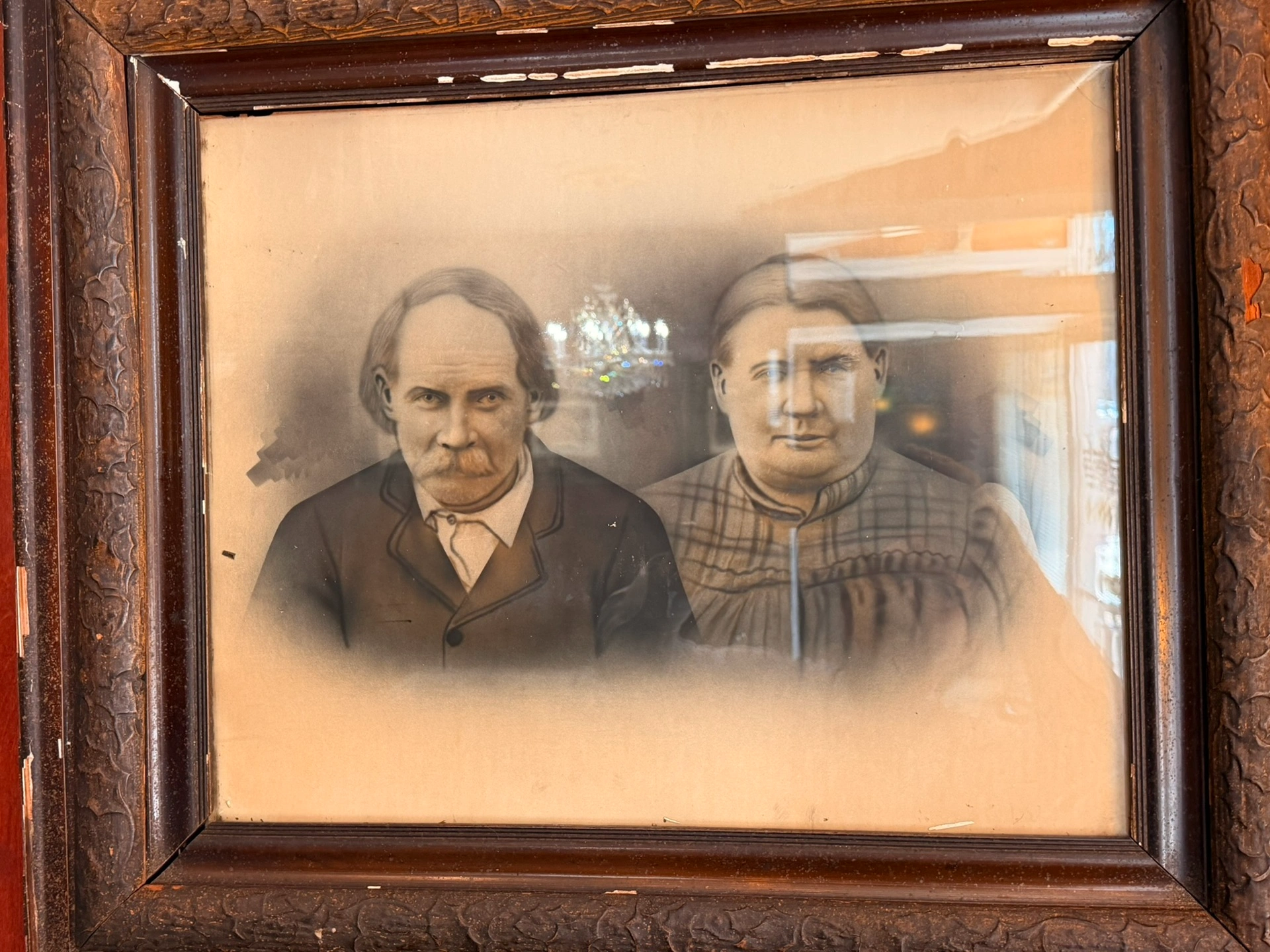
Joshua survived the war and later received a pension, so his wound did not kill him on the field. But survival should not be mistaken for easy recovery. Alabama Confederate pensions were generally tied to age, poverty, disability, or incapacity in later life. The fact that New Hope Church remained attached to his record suggests that it was remembered as a defining injury and a legitimate part of his claim to veteran status. For the family, that memory endured even after the armies and causes had passed into history.
From Battlefield to Pension Record
One of the most valuable things about the record you supplied is that it bridges wartime action and peacetime memory. Civil War service records tell us where soldiers enlisted and with which units they served. Pension records tell us what veterans themselves—or those who knew them—wanted the state to remember later. In Joshua’s case, the key remembered fact was not simply that he served. It was that he was wounded at New Hope Church, Georgia.
That specificity gives the family story historical grounding. It also places Joshua inside a documented and significant military episode of the Atlanta Campaign. Even where gaps remain, the known pieces fit together: a seventeen-year-old Alabama private, service in Company A of the 3rd Alabama Cavalry, a campaign in north Georgia, a wound tied to New Hope Church, and a later pension application preserved in county records.
What Can Be Said with Confidence—and What Still Needs Proof
Good history separates what is documented from what is inferred. Based on the records and published battlefield summaries reviewed for this article, the following points are well supported:
- Joshua S. Sullins was identified in the supplied record as a Confederate private, Company A, 3rd Alabama Cavalry, enlisted from Blountsville, Alabama.
- The same record states that he was wounded at New Hope Church, Georgia.
- The 3rd Alabama Cavalry is documented by the National Park Service as serving in the Atlanta Campaign.
- New Hope Church was fought on May 25–26, 1864, as part of the Atlanta Campaign, and it ended in a Confederate tactical victory after a costly Union assault.
Other points remain historically plausible but not yet individually proven for Joshua without additional primary material such as compiled service records, hospital records, muster roll notations, pension application pages, or postwar affidavits. These include the exact nature of his wound, whether he was mounted or dismounted when hit, the precise place of Company A on the field, and whether he returned to full active service immediately afterward.
A Family Story Set Inside National History
For descendants, the importance of New Hope Church is not only military. It is personal. This battle is one of the places where national history and family history become the same thing. Somewhere in the confusion of the Atlanta Campaign, in wet Georgia woods around a country church, Joshua S. Sullins was hit and carried that fact with him into later life. Long after the battle, the memory survived in the pension system, in county records, and now in family reconstruction.
That is why a battle like New Hope Church deserves attention. It was not just a line in campaign maps. It was the site of fear, endurance, injury, and survival for real men, including one young private connected to your own family line. His wound was not an abstraction. It was part of the lived experience that followed him home and remained attached to his name.
In that sense, the Battle of New Hope Church was both a Confederate tactical success and a human tragedy. It checked Sherman for the moment, showed the growing power of field fortifications, and deepened the bloody logic of the Atlanta Campaign. For Joshua S. Sullins, it also became the battle by which later generations would remember his war.
Sources
- National Park Service, 3rd Regiment, Alabama Cavalry, unit overview. Available at: nps.gov.
- American Battlefield Trust, New Hope Church, battle summary and casualty overview. Available at: battlefields.org.
- American Battlefield Trust, New Hope Church | May 25-26, 1864, battle map. Available at: battlefields.org.
- Family-supplied record details from Alabama pension card / Cullman County pension record card for J. S. Sullins, Alabama pension no. 30394, noting service in Company A, 3rd Alabama Cavalry and wounding at New Hope Church, Georgia.