Every family tree begins as a chart, a list, or a collection of names scattered across certificates, census pages, cemetery markers, and fading memories. But after enough time with those records, something begins to happen. The names stop being separate facts. The dates stop being isolated notations.
Places that once looked distant and unrelated begin to form a recognizable trail. In the case of this family story, that trail runs from Ireland and Scotland into Virginia, from Virginia into the Carolinas and Tennessee, from Tennessee and Georgia into Alabama, and then outward into the lives of descendants who carried those names into the modern era.
This is a story of migration, settlement, endurance, and memory. It is the story of how many different lines—Cook, Bradley, Sullins, Webb, Thomas, Davis, Oden, Fitzpatrick, McFarland, Holmes, Swafford, and others—gradually came together into one extended Alabama family.
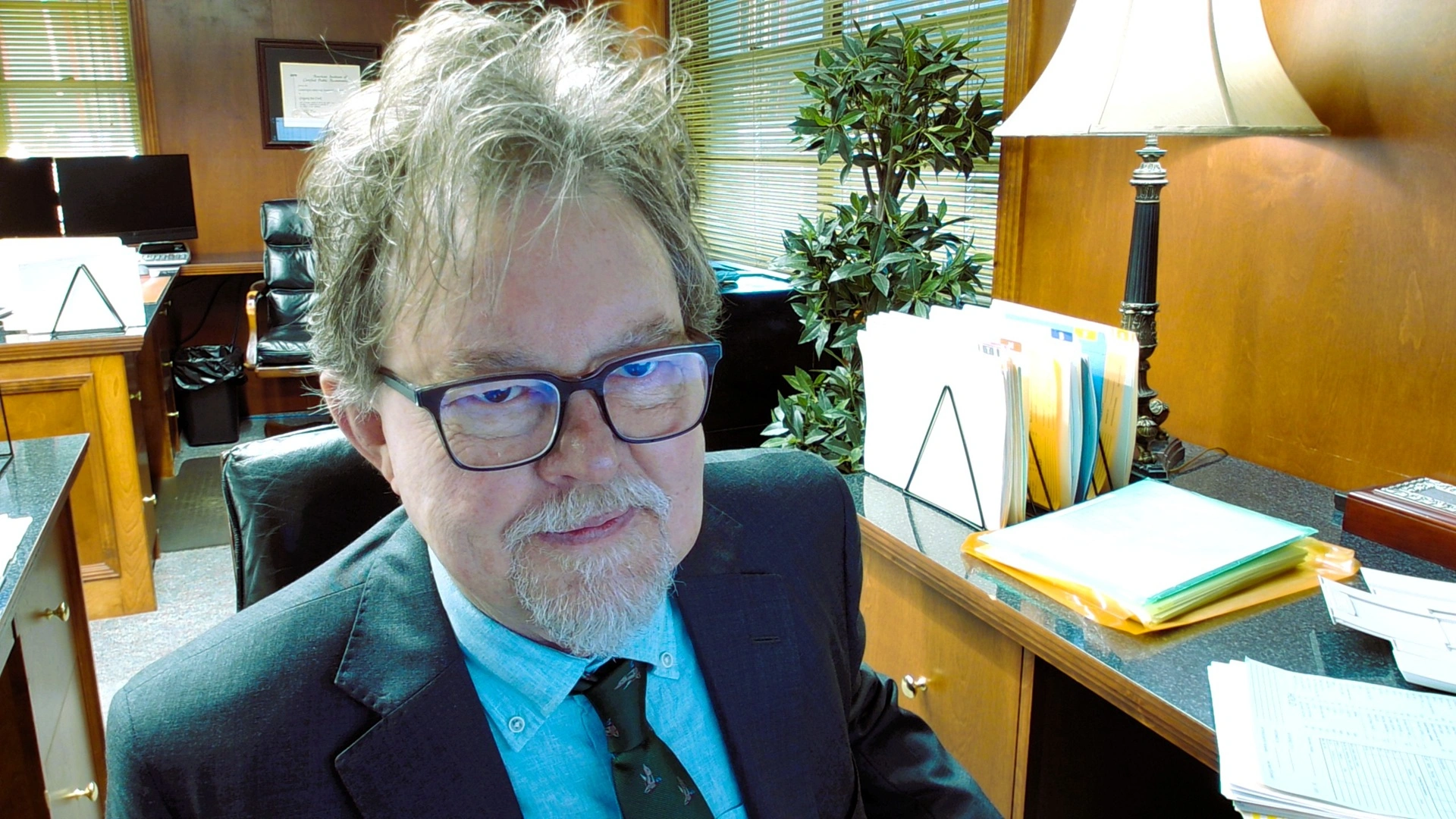
At a Glance
- Earliest roots: Ireland, Scotland, colonial Virginia, and the early South
- Major migration corridor: Virginia → South Carolina / Tennessee / Georgia → Alabama
- Key Alabama counties: Blount, Cullman, Marshall, Morgan, and nearby communities
- Recurring themes: frontier settlement, family persistence, faith, farming, war, and community
- Historical backdrop: colonial America, the Revolutionary era, westward movement, the Civil War, and modern Alabama life
- Family center of gravity: Hanceville, Cullman County, Blount County, and surrounding north Alabama
Why genealogy becomes more than genealogy
Genealogy has a way of changing its meaning as a person gets deeper into it. At first it feels like an exercise in record gathering. You look for a birth date, a marriage place, a burial location, or a census household. Then you learn that one ancestor came from County Down in Ireland, another from Perthshire in Scotland, another from Abbeville District in South Carolina, another from Greene County, Tennessee, and still another from Hall County, Georgia. Soon the family tree no longer feels like a neat chart. It feels like a map of movement. It feels like an account of choices, risks, losses, and perseverance across generations.
That is especially true in southern family history. Southern genealogy is rarely a straight line. It is a braid. Families moved, intermarried, reappeared in neighboring counties, crossed state lines that had once been frontier lines, and settled where work, land, kinship, or opportunity led them. The names in this research reflect that pattern. They point toward the deep roots of a family that did not begin in one place and remain there forever. Instead, it moved through the American story one generation at a time until it became distinctly, unmistakably Alabama.
The oldest remembered roots: Ireland, Scotland, and colonial America
Several lines in this research appear to reach back into Ireland and Scotland before taking root in colonial America. Those older origins matter because they explain why certain surnames and migration patterns recur. The Bradley, Fitzpatrick, McFarland, Ward, Darcy, and related lines all suggest movement from the British Isles into the American colonies during the eighteenth century or earlier. Names associated with places such as Carrick Fergus in County Down, Dublin, Upper Ossory, Gurteen in Galway, and Ulster remind us that the family story was already underway long before Alabama ever entered the picture.
Patrick Bradley, born in 1746 in Carrick Fergus, County Down, Ireland, stands out as one of the clearest examples. His later death in Abbeville, South Carolina, places him directly along a classic migration path: from Ulster into the American South, then into the interior frontier. That same pattern echoes in the McFarland line, where John McFarland is associated with Carrick Fergus and Jane Creswell McFarland is linked to Ulster. These are the kinds of clues that give a family story both texture and direction. They tell us that before there were Alabama farmers, Alabama laborers, Alabama homemakers, Alabama soldiers, Alabama church members, and Alabama grandparents, there were immigrants and settlers seeking footing in a new land.
The Scottish connection appears in names such as Sarah Jane Breckenridge of Breadalbane, Perthshire, Scotland. Even when the records are thin, those names still carry weight. They place the family in the broad stream of transatlantic migration that filled colonial Virginia and the early backcountry with Scots, Scotch-Irish, English, and Irish families. They remind us that long before the descendants of these lines knew places like Hanceville, Garden City, Bangor, or Cullman, their ancestors knew places that sounded entirely different and lived lives under very different circumstances.
Virginia as the great staging ground
If Ireland and Scotland represent the family’s oldest remembered European roots, Virginia appears as one of the earliest major American staging grounds. A remarkable number of names in this research point toward Virginia in the eighteenth century: Bailey Oden Sarah is associated with Virginia, John D. Delaney Sr. is tied to Bedford and Augusta-related regions, Mary Elizabeth Faulkner Heard is linked to Amherst County, Elizabeth Napier Fitzpatrick to Fluvanna County, Thomas Joseph Fitzpatrick to the Virginia Piedmont, James Roosevelt Davis to Virginia, and other lines likely passed through the colony or state before moving on.
This is not surprising. Virginia was one of the great launching points for migration into the southern interior. For many families, it served as the first durable American home before they pushed west or south. Its river valleys, established counties, and growing settlements offered the first generation of stability. But Virginia also eventually became a place from which people departed. Land became harder to obtain, families grew, opportunities shifted, and new frontiers beckoned.
When looking at the Fitzpatrick line, for example, one can imagine that movement in a concrete way. Thomas Joseph Fitzpatrick, born in Ireland, is later associated with Albemarle and Fluvanna in Virginia. Elizabeth Napier Fitzpatrick also appears in that same Virginia orbit. By the time later descendants moved onward into Georgia and the broader South, the pattern is clear: arrival, settlement, growth, and then departure again toward newer country.
Broad family migration pattern
- Origins in Ireland, Scotland, and early colonial America
- Settlement in Virginia and neighboring early American regions
- Expansion into South Carolina, Tennessee, and Georgia
- Relocation into north Alabama during the nineteenth century
- Consolidation of family identity in Cullman, Blount, Marshall, and surrounding counties
South Carolina and the Bradley, Oden, Kidd, and associated lines
South Carolina emerges as one of the most important crossroads in the family story. The Bradley line is deeply tied to Abbeville District and related South Carolina locations. John Kennedy Bradley Sr., born in 1784 in Abbeville, and Patrick Bradley before him, show how that family put down roots there after the earlier transatlantic migration. Mary Jane Kidd of Cedar Springs in Abbeville District strengthens that South Carolina connection. Hezekiah Oden of Edgefield and Peter Oden of the old Ninety-Six District likewise belong to an earlier generation of South Carolina settlement.
These names matter for more than geographical bookkeeping. South Carolina in the eighteenth and early nineteenth centuries was not merely another stop on the map. It was a defining phase in the transformation from immigrant family to southern frontier family. Here the lines became more locally established. Here marriages joined one family to another. Here the household names that later appear in Tennessee, Georgia, and Alabama likely first became connected in lasting ways.
South Carolina also reflects something about the character of the family history itself: persistence in places that were once edge country. The old districts of Abbeville, Edgefield, and Ninety-Six carry a certain frontier energy even now in genealogical memory. They remind us that these ancestors were not simply drifting through safe, settled towns. Many of them were part of the population pushing into and stabilizing the interior South. They were making lives where roads, institutions, and opportunities had to be carved out over time.
Greene County, Tennessee and the Appalachian connection
Another major cluster appears in Greene County, Tennessee. There we find names such as Badge Elizabeth, Darcy Elizabeth Ruth, John N. Darcy Jr., Anne Delaney, and John D. Delaney Sr. Greene County was one of the important early Tennessee settlements and a natural stopping place for families moving through the Appalachians. It was neither fully eastern in identity nor fully southern in the later Deep South sense. It was a mountain gateway, a place where lines from Virginia, the Carolinas, and immigrant streams could cross and settle.
That Tennessee connection matters because it suggests a key movement corridor into Alabama. Many north Alabama families came through east Tennessee or developed kinship ties there before moving farther south and west. The presence of Greene County in this research does not feel accidental. It feels structural. It suggests that some branches of the family passed through the mountain South before emerging in Alabama communities later in the nineteenth century.
The Delaney and Darcy names especially evoke that older Appalachian chapter. They anchor the family story in a region where land, kinship, and local identity mattered tremendously. Even when later descendants may have remembered only Alabama, the deeper map tells a fuller story. There was a Tennessee chapter before the Alabama chapter became dominant.
Georgia as both destination and bridge
Georgia appears repeatedly in this genealogy, and in many ways it functions as a bridge state between the eastern family roots and later Alabama settlement. Names associated with Gwinnett County, Hall County, Lumpkin County, Gilmer County, Union County, and Chattooga show that a significant portion of the family story passed through Georgia. Hester Ann Cole, Susan Anna Holmes, Winnie Caroline Swafford, William Young Swafford, Freeman Turner Thomas, William Alfred Thomas, John C. Cooke, and Sarah Rebecca Hammond all point in that direction.
Georgia in the nineteenth century was not one place but many different kinds of places: established counties, mountain communities, farming districts, and growing local networks. For this family history, Georgia seems to have served both as a destination and as a corridor. Some lines stayed there for generations. Others passed through before crossing into Alabama. Still others maintained ties across the state line, making the Alabama-Georgia relationship part of everyday family life.
The Holmes and Swafford lines illustrate that sense of movement particularly well. Winnie Caroline Swafford was born in Hall County, Georgia, and later died in Blount County, Alabama. William Young Swafford, associated with South Carolina and Gilmer County, Georgia, reflects the same broad migration. Hiram Roy Holmes and Susan Anna Holmes likewise show Georgia connections before later ties to Alabama and, in Susan Anna Holmes’s case, eventually Florida. These are not isolated details. They show the South as a connected family world, not as a set of separate boxes on a chart.
The arrival in Alabama
By the nineteenth century, the family story becomes unmistakably Alabama-centered. The counties of Blount, Cullman, Marshall, Morgan, and nearby communities begin to dominate the narrative. This is where the branches that had earlier moved through Virginia, Tennessee, the Carolinas, and Georgia became rooted enough that later descendants would recognize Alabama as home.
That move into Alabama was part of a larger American pattern. Families seeking land, work, and stability often continued southwestward after earlier settlement stages elsewhere. North Alabama, with its rolling land, creek bottoms, ridge communities, and developing towns, offered opportunity. It also offered proximity to kin. Once enough family branches entered the region, the area itself became magnetic. One branch would follow another, cousins would marry into neighboring families, and the local identity of the family would deepen year by year.
In this research, Alabama is not merely a late chapter. It is the chapter in which many of the previously separate lines became one extended local story. The family names cease to feel scattered and begin to feel interwoven. Cullman County, Blount County, Marshall County, and Morgan County are not just places on a map. They are the landscape in which this family became itself.
The Bradley family in Alabama memory
The Bradley line carries some of the oldest and strongest markers in the family story. Patrick Bradley’s Irish origins and South Carolina settlement place the line in a much older chapter of southern migration. John Kennedy Bradley Sr. continues that South Carolina presence. Jacob Lewis Bradley, born about 1830 in South Carolina and dying in Marshall County, Alabama, shows the line crossing another important threshold: the direct movement from the older eastern South into Alabama.
That is the kind of transition genealogists love to find because it makes the story visible. Here is not merely a surname appearing in two states. Here is a family trajectory. The Bradleys belonged first to the South Carolina backcountry and then to the Alabama story. By the time later Alabama descendants looked backward, South Carolina may have felt distant, but it was foundational. The Bradley family embodies the older southern habit of moving westward generation by generation until the new place became home enough that the old place faded into ancestral memory.
Ulcy Grant Bradley, born in Georgia in 1868 and later associated with Cullman, Alabama, further underscores the layered path of this line. South Carolina, then Georgia, then Alabama: it is all there in miniature. A single line can tell the story of regional migration better than a history textbook.
The Cook line: from older southern roots into modern north Alabama
No surname in this story carries more obvious personal significance than Cook. The Cook line represents both ancestry and continuity, because it reaches from the older southern generations into the present through names that are close in time and place. John C. Cooke, born in 1797 in Anson County, North Carolina and later dying in Chattooga, Georgia, suggests one older stage of the line. Silas Cook, born in North Carolina in 1843, adds another clue to the southern movement. By the late nineteenth and early twentieth centuries, the line is fully Alabama-connected through David F. Cook, Joseph Wheeler Cook, Joe Melvin Cook, Edna Cook, and ultimately Gregory Cook.
What makes the Cook line especially meaningful is that it allows the long migration story to narrow into a known, lived family world. David F. Cook, Joseph Wheeler Cook, and Joe Melvin Cook are not remote colonial names. They belong to the era in which memory, photographs, and local stories become more accessible. Their presence in Alabama grounds the earlier history in tangible family experience. Bangor, Hayden, Cullman County, and related north Alabama places make the story local and personal.
Joe Melvin Cook, born in Bangor in Blount County in 1937, reflects a family already well established in Alabama by the mid-twentieth century. By then, the long journey from North Carolina, Georgia, South Carolina, and beyond had condensed into a recognizably local family identity. Gregory Cook’s own birth in Cullman in 1960 completes that arc in an important symbolic way. The genealogy no longer ends in abstraction. It ends in a named descendant living in the very region where so many earlier lines converged.
The Davis and Millican lines: Morgan County, Garden City, and local continuity
The Davis line contributes another significant Alabama chapter. Daniel Briggs Davis, born in Tennessee in 1828 and dying in Morgan County in 1900, represents the kind of nineteenth-century movement into Alabama that is repeated across the family story. James Roosevelt Davis, born in Virginia, and James T. Davis, born in Morgan County, together suggest a family line that bridged the move from older states into an established Alabama presence. Parene Angeline Davis, born in Morgan County and later dying in Garden City in Cullman County, carries that line directly into communities central to later generations.
The Millican name reinforces the same pattern. Mary Ann Millican, born in Morgan County in 1856 and later dying in Garden City in Cullman County, connects one Alabama place to another within a family trajectory that had already become settled in the region. The movement here is not the long leap from Europe or Virginia. It is the more intimate local migration of Alabama families moving between counties, farming communities, and household networks. These details matter because they show how the family story evolved once the great migrations were largely complete. After that point, life was often about neighboring counties, not distant frontiers.
The Oden family: from South Carolina to Tennessee to probable Alabama
The Oden line is especially interesting because it seems to preserve an older frontier trail through multiple southern regions. Hezekiah Oden, born in Edgefield, South Carolina in 1735 and dying there in 1797, belongs to an early generation of Carolina settlement. Peter Oden, born about 1768 in the old Ninety-Six District, still belongs to that same world, though later records suggest he died after 1840, probably in Alabama. Lucinda Oden, born in Tennessee in 1806, indicates that by the next generation the family had already crossed into another region.
This is exactly the kind of line that makes southern genealogy vivid. In just a few generations, one can see the movement from old South Carolina districts into Tennessee and then likely onward into Alabama. That is not a static family story. It is a migrating family story. It reflects the restlessness and practical ambition of people who kept moving toward land, work, and kinship networks. By the time Odens appear in proximity to other Alabama-connected family names, they have already participated in the larger migration machine that built the inland South.
The Sullins and Webb connection: one of the emotional centers of the story
For many family researchers, there comes a point in the tree where the names stop feeling remote and begin to feel emotionally central. In this genealogy, that point is reached in the Sullins and Webb lines. Ellen Van Victoria Sullins, called Elsie, born in Alabama in 1887 and dying in 1966, is not merely an entry on a chart. She is a bridge between ancestral research and remembered family identity. Her connection to Joshua Sullins and Anna Taylor places her within a line that reaches deep into Alabama community life and, in Joshua’s case, into the Civil War generation.
Joshua Sullins , who died in 1918 in Hanceville, is especially compelling because he appears at the intersection of family memory, local history, and national history. A man who lived in Blount-Cullman country and fought in the Civil War carries the weight of a defining American era. His story reminds us that family genealogy is never isolated from the larger story of the nation. Wars, migrations, economies, and regions all pass through individual lives. Anna Taylor, likewise associated with Hanceville, joins that Sullins line to another important family branch.
When Elsie Sullins married into the Webb line, the family story deepened in a distinctly local way. Andrew Jackson Webb, born in Blount County in 1890 and later dying in Warrior, Jefferson County, reflects a family whose roots were already firmly Alabama. Sophia “Sophie” Webb, born in Cullman County and dying in Hanceville, strengthens that sense of local continuity. Even the more fragmentary Webb entries—John O. Webb and William Webb—suggest a line that had become part of the north Alabama fabric well before the twentieth century was underway.
There is something quietly powerful about these names. They belong to the era of grandparents, great-grandparents, and remembered communities. They bring the family story close enough that it feels familiar. Hanceville is no longer just a dot on the map. It becomes a household place, a kin place, a cemetery place, a church place, and a memory place.
The Thomas line: mountain Georgia into Cullman County
The Thomas line adds another route into Alabama, this time through the Georgia mountains. Freeman Turner Thomas was born in Lumpkin County, Georgia in 1901 and died in Cullman County in 1960. William Alfred Thomas, born in Union County, Georgia in 1867, continues that connection. Laura Faye Thomas, born in Hanceville in 1944 and dying there in 2019, brings the line squarely into modern local memory.
This is the kind of branch that shows how family migration into Alabama continued well into the late nineteenth and early twentieth centuries. Not all moves happened in the early frontier era. Some came later, shaped by work, marriage, land, or family opportunity. The mountain counties of north Georgia and the counties of north Alabama were close enough in culture and geography that such moves made sense. The Thomas line reflects that regional closeness. It is another reminder that the family story belongs not only to one county or even one state, but to the broader southern upland world.
The Holmes and Swafford families: Georgia to Blount County and beyond
The Holmes and Swafford names belong to one of the most readable migration patterns in the research. Winnie Caroline Swafford, born in Hall County, Georgia in 1847 and dying in Summit Cemetery in Blount County in 1914, stands almost as a symbol of the Georgia-to-Alabama transition. William Young Swafford, born in South Carolina and later dying in Gilmer County, Georgia, suggests the older stage of that same movement. Hiram Roy Holmes, born in Georgia and dying in Blount County, and Susan Anna Holmes, born in Georgia and later dying in Pensacola, show how lines could move through Alabama and onward again.
This is a useful reminder that family history does not always move in one direction and stop. Some lines came into Alabama and remained. Others came into Alabama and then later spread outward again. Still others maintained wider regional connections through marriage and migration. The Holmes and Swafford lines therefore enrich the family story by showing that Alabama became a center of gravity without always becoming the final point for every descendant.
The Heard, Hammond, Cole, Burns, Goodin, and Drinkard lines
Not every important family line in a genealogy is the main trunk. Some are the branches that give the tree its shape. The Heard, Hammond, Cole, Burns, Goodin, and Drinkard names may not always dominate the broad migration story, but they add depth and realism to it. Mary Elizabeth Faulkner Heard, born in Amherst County, Virginia and later dying in Heard County, Georgia, connects the family to another familiar southern path. Sarah Rebecca Hammond and Hester Ann Cole both reflect movement and settlement within the South’s interior. Mary J. Burns, Rebecca Goodin, and Martha Jane Drinkard deepen the Alabama and South Carolina associations further.
In long family history, these lines matter because they represent the ordinary work of life: marriages, households, farms, children, widowhood, burial, and continuity. Genealogy should never become so focused on the oldest immigrant or the most dramatic war veteran that it overlooks the women and men who carried daily life forward. These names remind us that a family survives not only because of the bold moves of a few ancestors, but because many others kept homes, raised children, worked land, endured illness, and held communities together.
Civil War memory and the weight of national history
No southern family history of this scale can avoid the Civil War. Even where the records are incomplete, the war’s presence is unmistakable. Joshua Sullins, remembered as having fought in the Civil War, being wounded in the battle at New Hope Church Georgia and later dying in Hanceville in 1918, gives that history a named local anchor. But the war likely touched many more branches indirectly as well. Men of the right age in Alabama, Georgia, South Carolina, and Tennessee in the 1860s were often drawn into military service or deeply affected by the conflict even when no service record sits immediately at hand in a family summary.
The importance of this is not merely patriotic or dramatic. It is generational. The Civil War shaped landholding, economics, health, widowhood, migration, and the social fabric of the South for decades afterward. Families that appear in Alabama records after the war are often living in the war’s shadow even when the documents do not say so directly. To study a family line from that era is to study a people who lived through upheaval and then rebuilt ordinary life one season at a time.
What this research suggests
Even where every link is not fully documented in narrative form yet, the collective pattern is strong: this family history reflects a classic southern migration story shaped by the Atlantic world, colonial settlement, interior movement, state-line crossings, and eventual concentration in north Alabama communities.
Hanceville as a family center
Some places recur so often in a family history that they become almost like family members themselves. Hanceville is one of those places here. Joshua Sullins died there. Anna Taylor is tied there. Sophie Webb died there. Laura Faye Thomas lived and died there. The wider Cullman County landscape appears repeatedly in connection with the family. That repeated presence matters because it means the place was not incidental. It was home.
Genealogy often becomes most meaningful when it focuses on such places. Once a researcher knows that a family repeatedly returned to one community, that community becomes more than geography. It becomes the setting of weddings, births, funerals, church attendance, farm work, local commerce, school years, and kitchen-table memory. Hanceville, in that sense, stands near the emotional center of this family narrative. It is one of the places where older migrations came to rest and became local history.
Blount County, Cullman County, Marshall County, and Morgan County: a north Alabama family landscape
One of the most satisfying features of this genealogy is the way it gradually defines a coherent north Alabama family landscape. Blount County contributes Bangor, Hayden, Summit Cemetery, and early Webb and Cook associations. Cullman County contributes Hanceville, Garden City, Cullman itself, and several later generations. Marshall County appears in connection with Jacob Lewis Bradley and other branches. Morgan County comes into view through the Davis and Millican lines. Together these counties create a regional family map that is both specific and broad.
This is an important point because it shows that the family did not merely arrive in Alabama and scatter randomly. It gathered in a recognizable part of the state. These were connected communities, not isolated dots. Roads, kinship, church life, market towns, and work patterns would have linked them. The family’s identity therefore became not just Alabama identity in general, but north Alabama identity in particular. That distinction matters. North Alabama has its own history, rhythm, accent, terrain, and social memory. The family belongs to that world.
The women who hold the story together
Family trees can sometimes be told too much through fathers and surnames, but the lived reality of genealogy is that women often provide the connective tissue that makes the whole story legible. Elizabeth Badge, Sarah Bailey Oden, Sarah Jane Breckenridge, Mary Jane Kidd, Jane Creswell McFarland, Rosa Ward, Elizabeth Napier Fitzpatrick, Anne Delaney, Elizabeth Ruth Darcy, Mary Elizabeth Faulkner Heard, Sarah Rebecca Hammond, Hester Ann Cole, Winnie Caroline Swafford, Mary Ann Millican, Parene Angeline Davis, Catherine Dicy, Martha Jane Drinkard, Elsie Sullins, Sophie Webb, Anna Taylor, Laura Faye Thomas, and others are not secondary figures. They are central figures.
They are central not only because every generation depends upon them, but because they often carried memory, faith, household continuity, and family connection across difficult periods. When families moved, women turned movement into home. When wars or deaths disrupted a line, women often preserved the line through children and household endurance. In genealogy, the names of mothers, daughters, wives, sisters, and widows deserve special reverence because they are frequently the ones through whom family survival became possible.
How the names themselves tell a story
Even without full biographies for every ancestor, the names tell their own story. The repeated use of names such as John, William, Mary, Sarah, Elizabeth, Thomas, Andrew Jackson, Joseph, and Anna reflects the naming habits of older southern families. These habits often linked children to grandparents, honored kin, or preserved family identity across generations. The result is that the genealogy feels internally connected even before every relationship is fully mapped. Certain names echo. They recur like small bells in the record, reminding the researcher that these were not isolated households but a web of memory and inheritance.
There is also a quiet poetry in some of the names: Elsie, Parene Angeline, Winnie Caroline, Ulcy Grant, Freeman Turner, Joseph Wheeler. Such names carry the flavor of their eras. They place a person in time even before the dates are read. They also make genealogy feel intimate. One can imagine those names spoken in kitchens, on porches, in churches, across fields, and at grave sites.
From records to story
One of the challenges in genealogy is knowing when the accumulated evidence is enough to begin telling the story in prose. Pure genealogy values documentation, and rightly so. But there comes a point when the pattern is too strong to leave only in table form. This family research has reached that point. The migration arc is visible. The county clusters are visible. The interwoven lines are visible. The story deserves to be told not merely as a database but as a family narrative.
That narrative is not a fantasy. It is an interpretation grounded in names, dates, and places. It does not require inventing scenes that never happened. It only requires recognizing what the records are already saying: that this family has deep roots, wide movement, and a powerful concentration in north Alabama. Once that is understood, the chart becomes a story almost on its own.
What this genealogy says about identity
To study a family like this is to learn that identity is layered. A modern descendant may think of himself first as an Alabamian, and that is entirely reasonable. But behind that Alabama identity stand older layers: Georgia mountain connections, Tennessee frontier passages, South Carolina backcountry roots, Virginia colonial staging grounds, and before all of that, the old places of Ireland and Scotland. None of those layers cancels the others. They build upon each other.
That is one reason genealogy matters so much. It shows that identity is inherited in concentric circles. The immediate circle is local and personal. The wider circle is regional and historical. The widest circle reaches back across oceans and centuries. A family tree reminds a person that he belongs not only to the present but to all those earlier circles at once.
Major surnames in this family story
Cook / Cooke
A central line connecting older southern roots to twentieth-century and modern north Alabama life.
Bradley
An important line with Irish and South Carolina associations that later reaches into Alabama.
Sullins / Webb
Emotionally central Alabama lines strongly associated with Hanceville, Blount County, and living family memory.
Davis / Millican
Important Morgan and Cullman County connections showing settled Alabama continuity.
Thomas / Holmes / Swafford
Strong Georgia-to-Alabama migration lines contributing to the north Alabama family landscape.
Oden / Fitzpatrick / McFarland / Ward
Older South Carolina, Virginia, and Irish-linked lines that deepen the family’s early American roots.
The personal meaning of the research
In the end, genealogy is always more than historical curiosity. It is personal. To see one’s own surname near the end of such a long chain is humbling. It means that all the movement, hardship, marriages, burials, departures, arrivals, and ordinary acts of endurance somehow held together long enough to produce the present generation. That realization gives a person a new respect for the people whose names fill the older records. They were not abstractions. They were the necessary precondition for everything that came later.
It also changes how one sees local life. A church cemetery becomes more than a cemetery. A county line becomes more than a line. A town such as Hanceville becomes more than a familiar Alabama place name. All of it begins to feel inhabited by family history. The landscape itself becomes ancestral.
A southern family, fully formed
Looking across the full sweep of the research, a clear conclusion emerges. This is a deeply rooted southern family story shaped by immigration, frontier settlement, Appalachian movement, Alabama consolidation, and generational continuity. It is not the story of one narrow line alone. It is the coming together of many lines over time until they formed one extended family world.
The Bradleys brought old South Carolina and Irish depth. The Fitzpatricks and McFarlands reinforced transatlantic roots. The Delaneys and Darcys pointed toward east Tennessee and the mountain South. The Swaffords, Holmeses, Thomases, and others carried Georgia into the picture. The Davises, Millicans, Webbs, Sullinses, and Cooks made Alabama the lasting center. Together they tell a story that is broader than any one branch and more intimate than any general history of the South.
Final reflection
There is something deeply satisfying about seeing how all these names, dates, and places finally cohere. The family began in many places. It crossed water, mountains, districts, counties, and state lines. It lived through colonial beginnings, early American expansion, the Civil War era, and the remaking of the South. It eventually gathered in the towns, farms, ridges, and communities of north Alabama. That is where the story became local, remembered, and personal.
And that, in the end, may be the greatest gift of genealogy. It shows that the present did not appear out of nowhere. It was built slowly, one household at a time, by people whose names still deserve to be spoken. The records preserve them. The story honors them. And the family that came after them carries them forward.
Related family history pages
