The Overtrade is the lesson every active trader has to learn the hard way. The market can tempt you into thinking more activity means more opportunity. It does not. Sometimes the best trade is the one you refuse to take.
Lessons from Experience
What I Avoid – Lessons from Overtrading
I’ve tried the complicated setups—more screens, more tools, more noise. None of it improved my trading.
The biggest improvements came from simplifying. Removing distractions. Focusing on what actually matters.
See the Simple Setup I Use InsteadAs an Amazon Associate, I may earn from qualifying purchases.
Overtrading usually begins after a good trade or a frustrating miss. You see movement everywhere. You feel like you need to be involved. The screen starts making decisions for you instead of your plan. That is when discipline matters most.
One thing that helps me stay patient during VWAP pullbacks is using a simple tool like this: the timer I use on my desk . It sounds basic, but it helps slow me down and avoid chasing entries.
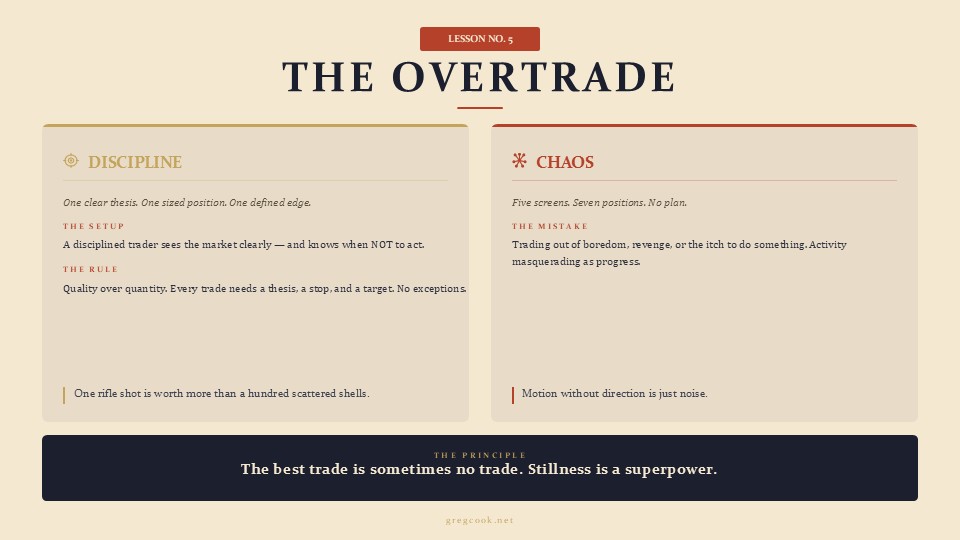
The Setup
A disciplined trader sees the market clearly and knows when not to act. That is the part most people underestimate. Waiting is not weakness. Waiting is a position.
The best setups are usually simple enough to explain before the entry. If you cannot say why you are buying, where you are wrong, and where you plan to take profit, the trade is probably impulse dressed up as strategy.
The Rule
Every trade needs a thesis, a stop, and a target. No exceptions.
The rule protects capital, but it also protects focus. One clean rifle shot is worth more than a hundred scattered shells. A trader who preserves attention can recognize the next real setup when it appears.
The Mistake
The mistake is trading out of boredom, revenge, or the itch to do something. Five screens. Seven positions. No plan. That is not market skill. That is motion without direction.
Overtrading can quietly erase a good morning. It turns small commissions, spreads, late entries, and rushed exits into a drain. Worse, it changes your mental state. You stop reading the market and start reacting to noise.
The Principle
Discipline
One clear thesis. One sized position. One defined edge.
Chaos
Five screens. Seven positions. No plan. Activity masquerading as progress.
The Rule
Trade only when the setup, stop, and target are all clear before entry.
The Principle
The best trade is sometimes no trade. Stillness is a superpower.
Field Notes
For my own trading, this lesson is about protecting the day. A green day can become a red day when I keep looking for one more trade after the clean money has already been made.
The goal is not to trade all day. The goal is to trade well. When the market gets unclear, step back. Let the next setup earn your attention.
