The Reload begins after a loss shakes your confidence. The screen feels hostile, the last trade is still talking, and the temptation is to make the money back immediately.
That is exactly when the best traders slow down. A reload is not revenge. It is a reset. You step away, close the charts, review the trade with honest eyes, and come back only when the next setup is clear.
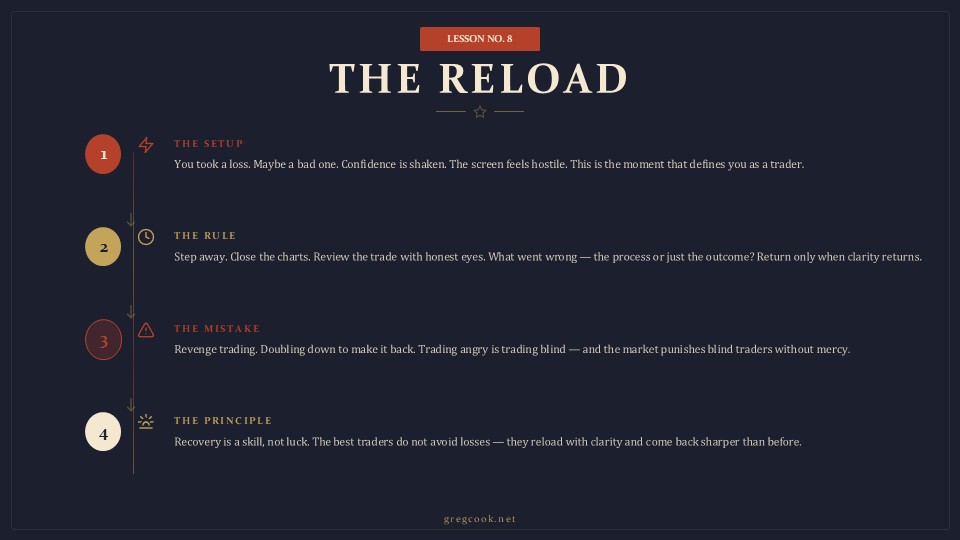
The Setup
You took a loss. Maybe a bad one. Confidence is shaken. The screen feels hostile. This is the moment that defines you as a trader.
The next decision matters more than the last trade. The loss is over; the danger is letting it choose your next entry.
The Rule
Close the charts. Review the trade with honest eyes. What went wrong — the process or just the outcome? Return only when clarity returns.
The reload is not automatic. It is earned by regaining discipline, checking the setup, and refusing to trade from frustration.
The Mistake
The mistake is revenge trading. Doubling down to make it back is trading angry, and trading angry is trading blind.
The market punishes blind traders without mercy. A loss can be managed. An emotional spiral can turn a normal red trade into a bad trading day.
The Principle
The Setup
A loss has shaken confidence. The screen feels hostile, and judgment can get noisy.
The Rule
Step away, close the charts, and review the trade honestly before returning.
The Mistake
Revenge trading turns frustration into blind risk.
The Principle
Recovery is a skill. Reload with clarity and come back sharper than before.
Field Notes
For my own trading, a reload works best when I separate outcome from process. A good trade can lose. A bad trade can win. The review has to be honest enough to know the difference.
After a loss, I want the next trade to stand on its own. It must have a thesis, a level, a stop, and a target. If it only exists because I want the money back, it is not a trade worth taking.
